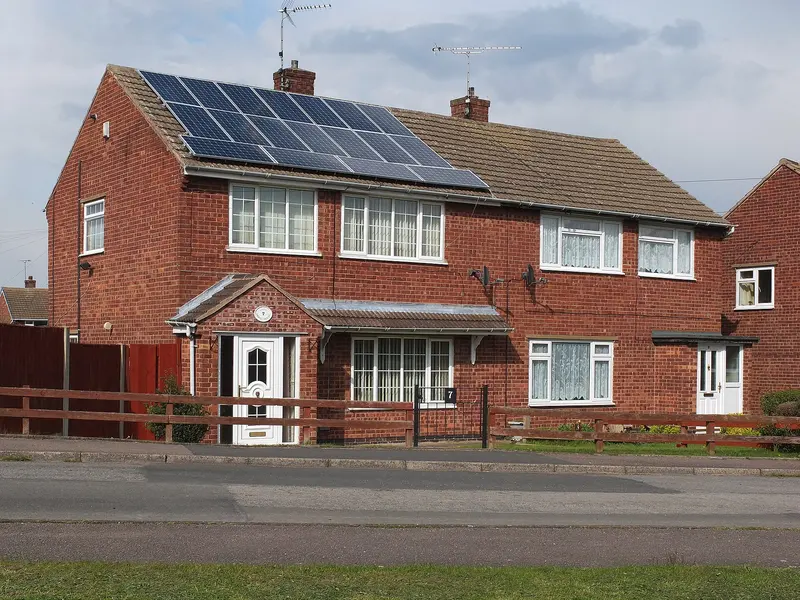
What it is
The Smart Export Guarantee, which started on 1 January 2020, requires licensed electricity suppliers to offer a tariff to small low-carbon generators — including home solar — for the electricity they export to the grid. The rate must always be above zero, and you're paid on export meter readings. Each supplier sets its own rates and terms.
Suppliers with at least 150,000 domestic electricity customers must offer SEG tariffs; smaller suppliers may choose to.
The SEG covers Great Britain only. In Northern Ireland, ask your supplier about an export tariff — see Scotland, Wales and Northern Ireland.
What you need
- Certification: solar systems of 50 kW or less need an MCS certificate (or proof of meeting an equivalent scheme). Some suppliers also accept Flexi-Orb certificates. In practice, use an MCS-certified installer.
- A smart meter that can record exports half-hourly.
- Paperwork — for example, E.ON Next asks for the certificate, proof of address, a photo of the meter, a wiring diagram if you have a battery, and the network operator's acceptance letter.
Setting up the export meter point with your network operator takes about 1–4 weeks; Octopus estimates 2–4 weeks in total.
You don't have to take an export tariff from the supplier you buy electricity from, but the best rates usually require it.
Example rates
Checked on supplier websites on 9 October 2026 — they change often:
- Octopus — Outgoing Octopus: 12p per kWh, variable, for Octopus customers on certain import tariffs.
- Octopus — Prime Outgoing: 16p from 4pm to 7pm and 9p at other times.
- E.ON Next — Next Export Exclusive: 13p, 12-month fixed, for E.ON Next import customers.
- E.ON Next — Next Flex Export: 6p, variable, open to anyone.
- EDF — Export 12m: 13p, 1-year fixed, for existing EDF residential customers.
- EDF — SEG Export Variable: 3p, open to anyone.
Some higher rates are only for customers who bought their solar or battery from that supplier.
Points to watch
- You can't take SEG and Feed-in Tariff export payments from the same supplier at the same time, and Octopus won't accept you if you've had FiT payments in the last 12 months.
- Plug-in solar kits don't come with an MCS certificate, so most suppliers won't pay for their exports. See plug-in solar.
- Compare the export rate together with the import tariff you'd have to take — a high export rate tied to a dearer import rate may not be the best deal.
Sources
- Ofgem: Smart Export Guarantee (SEG)
- Ofgem: SEG guidance for generators
- Octopus Energy: Outgoing Octopus export tariffs
- E.ON Next: Smart Export Guarantee tariffs
- EDF: Smart Export Guarantee tariffs
- Energy Saving Trust: Solar panels
- Energy Saving Trust: Plug-in solar panels
- Citizens Advice: Find an installer for energy efficiency home improvements
This guide is general information, not financial or legal advice. Rules and prices change, and some differ between England, Wales, Scotland and Northern Ireland — check the sources for your situation.