What changed
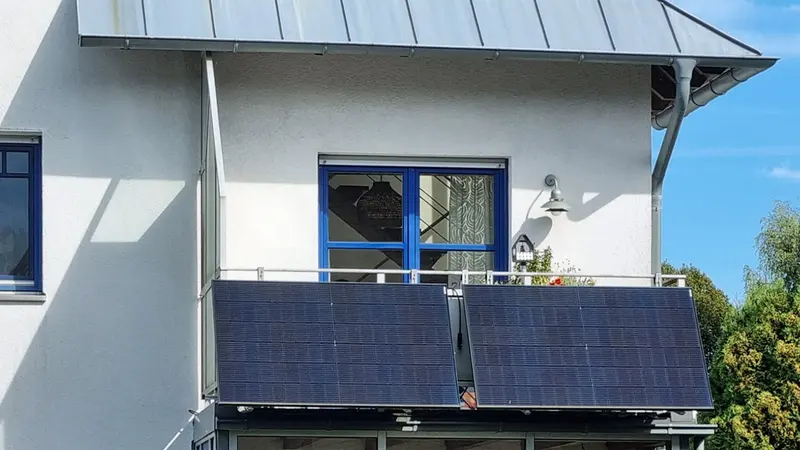
Since 27 August 2026, plug-in (balcony or garden) solar has been legal in England, Scotland and Wales. It isn't yet legal in Northern Ireland, where separate regulations need updating.
A plug-in kit is a small set of panels with a microinverter that plugs into an ordinary wall socket, so you use the electricity in your home without an electrician wiring it in.
The rules
- The microinverter's output is capped at 800 W.
- Only one device per home for now — you can't link several together. The government is looking at allowing more.
- Plug it straight into a fixed wall socket — never an extension lead or adaptor.
- The device must be on the Energy Networks Association's type-test register, and you must register it before use, giving your name, postcode, and the make and model.
- In England, permitted development rules don't allow plug-in solar to be fixed to wooden walls, balconies, fences, gates or timber cladding.
- Renters, leaseholders and flat owners need the landlord's or freeholder's permission. Listed buildings and conservation areas may need consent.
Costs and savings
- Kits that meet UK rules cost from about £450, including panels, microinverter, brackets and cables. Retailers named by the government include Currys, B&Q, Screwfix, Amazon, Argos and Wickes.
- The Energy Saving Trust (EST) estimates an 800 W kit makes about 700 kWh a year, saving about £100 a year if you're home all day and £70 if you're out (based on Manchester, a south-facing 30° tilt, 2,500 kWh a year and 24.7p per kWh).
- The government says up to £110 a year, and up to 20% of an average home's electricity.
- Kits bought from a shop without installation are charged standard-rate VAT — the 0% rate applies only to installed systems.
EST says current devices suit gardens better than balconies; a balcony needs a suitable frame and permission.
What it can't do
- No export payments: most suppliers won't pay Smart Export Guarantee rates for plug-in solar because it has no MCS certificate, and Citizens Advice says current rules mean you can't be paid for its exports.
- No battery: current rules don't allow plug-in output to be stored in a battery.
Insurance
Citizens Advice has raised questions about insurance for plug-in solar. Check with your home insurer before you fit one.
Plug-in or rooftop?
A plug-in kit is cheap and quick, but small. A rooftop system makes several times as much and can earn export payments — the government estimates rooftop solar can save up to £480 a year. See are solar panels worth it?.
Sources
- Energy Saving Trust: Plug-in solar panels
- GOV.UK: Households can save as plug-in solar panels come to market
- Citizens Advice: Six things to know before plug-in solar panels hit UK shelves
- Citizens Advice: Response to ENA consultation on plug-in micro-generation
- legislation.gov.uk: GPDO 2015 (England) Schedule 2 Part 14
- HMRC VAT Notice 708/6: Energy-saving materials and heating equipment
This guide is general information, not financial or legal advice. Rules and prices change, and some differ between England, Wales, Scotland and Northern Ireland — check the sources for your situation.